

What is Shoulder Dislocation?
A shoulder dislocation is an injury that occurs when the upper arm bone (humerus) separates from its socket in the shoulder joint.
.avif)


Publication Date:
19/8/2026 10:17 AM
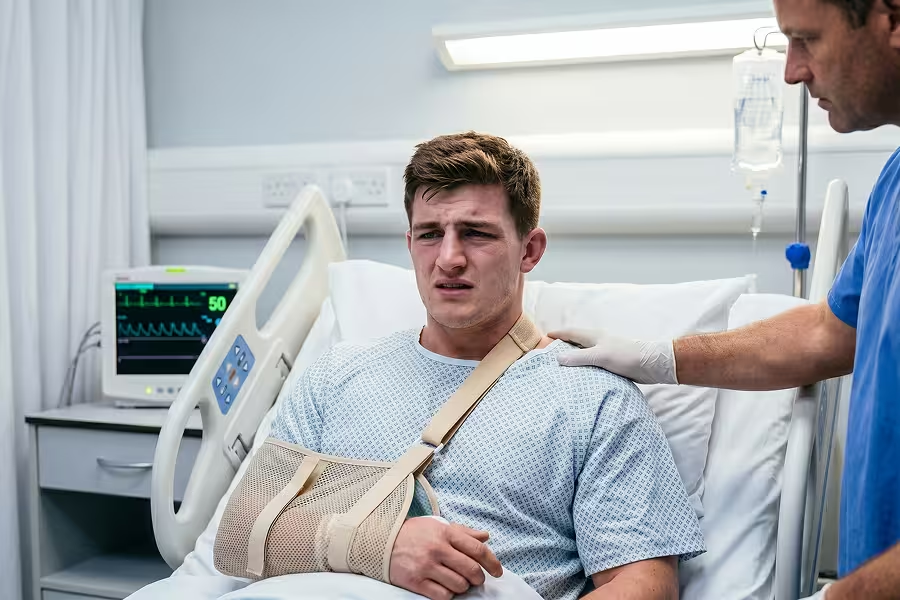
The most common type is anterior shoulder dislocations, which develop when the arm is forced into an abducted and externally rotated position. When a dislocation occurs, the ligaments, capsule, and other supporting tissues that hold the shoulder in place can be damaged. The patient's age, the elasticity of the connective tissue, and the degree of damage are important factors that affect the likelihood of recurrence in the future.
The shoulder joint is formed by the articulation of the head of the humerus with the glenoid surface on the scapula. This structure is supported by ligaments, the joint capsule, and surrounding muscle-tendon groups. While the shoulder's wide range of motion is a great advantage, it also increases its susceptibility to dislocation. Approximately 95% of shoulder dislocations occur anteriorly. In this case, the head of the humerus slides forward out of the joint socket. Dislocation is extremely painful, and the person has difficulty moving their arm. The natural appearance of the shoulder may be distorted, and a depression may be noticed in the joint area. More rarely, posterior or inferior dislocations can also occur. This injury, which can occur in all age groups, may sometimes be accompanied by fractures and vascular or nerve damage.
Symptoms of Shoulder Dislocation
- Sudden and severe pain in the shoulder area
- Significant limitation in arm and shoulder movements
- Visibly noticeable deformity in the shape of the shoulder
- Swelling and bruising
- Numbness, tingling, and loss of strength in the shoulder, arm, or hand
What Causes Shoulder Dislocation?
Shoulder dislocations mostly occur as a result of trauma and sports injuries. Falls, collisions, or forcing the shoulder beyond its natural range of motion can lead to dislocation. The risk is particularly higher in sports that involve intensive use of the shoulder, such as volleyball, handball, basketball, and swimming. Movements where the arm is hyperextended backward can also facilitate dislocation.
How Is Shoulder Dislocation Diagnosed?
Patients with shoulder dislocation typically present to a healthcare facility with complaints of severe pain, inability to use the arm, and shoulder deformity.
During the diagnostic process, X-ray imaging should be performed first. X-rays help determine the direction of the dislocation and evaluate any accompanying fractures. After the dislocation is reduced, a second X-ray is taken to check if the procedure was successful.
After pain control is achieved, Magnetic Resonance Imaging (MRI) may be requested. MRI provides detailed information about ligament injuries, tendon damage, labral tears, and additional injuries to bone tissue.
Treatment Methods for Shoulder Dislocation
Shoulder dislocations can often be reduced without requiring surgery. This procedure is medically referred to as "closed reduction." Before reduction, necessary medications may be administered to relax the muscles around the shoulder.
Depending on the direction and type of dislocation, the shoulder joint is brought back to its anatomical position using controlled maneuvers with different techniques. A significant reduction in pain is observed after a successful reduction. After the procedure is completed, control X-rays are taken to confirm that the shoulder is in the correct position.
Rehabilitation Process
After the shoulder is reduced, the rehabilitation period begins, which is an important phase of the recovery process. During this period, a sling, shoulder brace, or special supportive devices may be used to protect the shoulder.
After the protection period is complete, a physical therapy program is implemented to regain the shoulder's range of motion, muscle strength, and joint stability. The goal is for the shoulder to return to its normal functions through exercises planned by Central Hospital's expert physiotherapists.
During the shoulder's resting period, light exercises can be performed to maintain the mobility of the elbow, wrist, and fingers. The duration for which the shoulder will be kept immobile is determined by the patient's age, the severity of the injury, and their response to treatment.
Risk of Recurrence in Shoulder Dislocations
The likelihood of experiencing another dislocation after the first one is highly variable, reported to be between 14% and 100%. One of the most significant determining factors in this regard is the age at which the first dislocation occurred.
Approximately 87% of dislocations occurring under the age of 20 and not treated surgically may recur. After the age of 30, this rate significantly decreases. The risk of recurrence is particularly higher in active athletes and individuals whose professions require them to use their arms above shoulder level.
Individuals who experience recurrent dislocations over many years may develop osteoarthritis and structural deterioration in the shoulder joint.
What is a Bankart Lesion?
A Bankart lesion is damage to or detachment of the labrum, a cartilaginous structure that surrounds the shoulder joint socket. In some cases, this injury may also be accompanied by bone loss or a fracture, which is then referred to as a bony Bankart lesion.
Bankart lesions are one of the significant risk factors, especially for recurrent shoulder dislocations. In traumatic dislocations, tendon, vascular, nerve, and bone injuries may also be observed.
Shoulder Dislocation Surgery
Many shoulder dislocations can be successfully treated with non-surgical methods. However, surgical treatment may be recommended for young individuals, active athletes, those working in physically demanding jobs, and patients experiencing recurrent dislocation problems.
The primary goal of surgery is to ensure joint stability while preserving the shoulder's range of motion. To achieve this, the labrum, ligaments, and other supporting tissues damaged during the dislocation are repaired.
Arthroscopic Shoulder Dislocation Surgery
Today, arthroscopic methods are frequently preferred for the treatment of shoulder dislocations. Also known as "closed shoulder surgery" among the public, this method is a minimally invasive surgery performed through small incisions.
During arthroscopy, a camera and special surgical instruments are inserted into the shoulder. Thanks to the magnified view, labrum, tendon, and ligament injuries can be thoroughly evaluated and repaired.
This method can treat recurrent dislocations, as well as rotator cuff tears, labrum damage, and certain bone problems.
In some patients, open surgical techniques are preferred. Bone grafting procedures may be performed, especially in cases of significant glenoid bone loss.
Possible Risks of Shoulder Dislocation Surgery
As with any surgical procedure, shoulder dislocation surgeries also carry certain risks:
- Infection
- Nerve or vascular injuries
- Inadequate repair
- Stiffness in the shoulder joint
- Permanent or temporary pain
- Recurrence of dislocation
- Need for additional surgical intervention
These risks can be significantly reduced with experienced surgical teams and appropriate techniques.
Post-Surgery Recovery Process
After shoulder dislocation surgery, the recovery period may vary depending on the scope of the procedure performed.
Patients typically reach a level where they can perform light daily activities within 2-3 weeks. It is recommended to use a shoulder sling during the first few weeks. Activities such as driving, shopping, and heavy lifting may require a longer waiting period.
With doctor's approval, controlled sports activities can be started approximately 6 weeks later. Full strength and function in the shoulder, however, may take several months to recover. Return to contact sports is generally recommended after 4-6 months.
Post-Surgery Physical Therapy
A post-surgical physical therapy program is implemented to prevent shoulder stiffness and restore muscle strength.
While protective and controlled movements are planned in the initial weeks, strengthening exercises are introduced in the later stages. Regular performance of exercises that the patient can do at home positively affects the recovery process.
If excessive pain or unexpected complaints develop during exercises, the doctor overseeing the treatment should be consulted immediately.
What Can Be Done to Prevent Shoulder Dislocation?
- Movements that excessively strain the shoulder should be avoided.
- Caution should be exercised against falls.
- Individuals who play sports should regularly strengthen the muscles around their shoulders.
- Adequate warm-up and stretching exercises should be performed before training.
- Protective equipment should be used when necessary.
- Individuals who have previously experienced a shoulder dislocation should not neglect recommended rehabilitation programs and should regularly perform exercises that increase shoulder stability.
FAQS
We have put together frequently asked questions so that we can help you better. You can easily find the information you are looking for below
Do you still have something on your mind?
We're here! You can contact us to help you as soon as possible.