

What is Scoliosis? Symptoms, Diagnosis, and Treatment Methods
What is scoliosis and what are its symptoms? Learn about the Cobb angle, scoliosis degrees, bracing and exercise therapy, and scoliosis surgery.


Publication Date:
17/11/2026 12:43 PM

What is Scoliosis? Symptoms, Diagnosis, and Treatment Methods
Scoliosis is a three-dimensional spinal deformity that occurs when the spine curves to the side when viewed from the front or back, and in some cases, rotates on its own axis. On an X-ray, the curvature of the spine can often resemble the letter C or S.
Scoliosis can be detected during childhood and adolescence, but it can also develop in adulthood. The degree of the curvature, the individual's age, growth potential, spinal structure, and the likelihood of the curvature progressing are important factors that determine the treatment approach.
Surgery is not required for every case of scoliosis. While regular monitoring is sufficient for some individuals, bracing, scoliosis-specific exercises, or surgical treatment may be considered for others. The appropriate approach is determined following an evaluation by a physician experienced in orthopedics and spinal surgery.
What Is Scoliosis?
Scoliosis is a structural disorder where, in addition to the lateral curvature of the spine, rotation of the spinal vertebrae may also be observed. In medical evaluation, a Cobb angle of 10 degrees or more measured on a standing spinal X-ray is one of the criteria used to define scoliosis.
The natural structure of the spine includes forward or backward curves in the neck, upper back, and lower back regions. Scoliosis, unlike these natural curves, is a lateral deviation of the spine.
The appearance of scoliosis can vary from person to person. While the curvature remains mild in some individuals, it may progress over time in others. For this reason, it is not possible to determine the degree of scoliosis or the need for treatment solely by looking at the external appearance.
What Causes Scoliosis?
There is no single cause for scoliosis. In idiopathic scoliosis, the most common type, the exact cause of the curvature is unknown. It is believed that genetic and biological factors may play a role in its development.
Scoliosis can be examined in different groups based on its cause:
Idiopathic scoliosis
This is the type of scoliosis for which a definitive cause cannot be determined. It is particularly seen during childhood and adolescence. It can be classified as infantile, juvenile, or adolescent idiopathic scoliosis depending on age groups.
Congenital scoliosis
This can occur as a result of some vertebrae not forming normally or failing to separate during the development of the spine in the womb. Congenital differences in spinal structure can lead to curvature.
Neuromuscular scoliosis
This can develop in association with certain diseases affecting the brain, spinal cord, nerves, or muscles. Impairment of muscle control and trunk balance can lead to curvature of the spine.
Degenerative scoliosis
This usually develops in adulthood, along with age-related changes in the discs and joints of the spine. It may be accompanied by back pain, postural disorders, or complaints related to nerve compression.
The belief that scoliosis is caused by poor posture, carrying heavy school bags, or participating in certain sports is incorrect. In particular, the cause of idiopathic scoliosis is often unknown.
What Are the Symptoms of Scoliosis?
The symptoms of scoliosis can vary depending on the location and severity of the curvature, as well as the person's age. In mild cases of scoliosis, there may be no noticeable symptoms, and the curvature might only be detected during a routine examination.
The most common symptoms include:
- One shoulder appearing higher than the other
- One shoulder blade appearing more prominent than the other
- Uneven waistline or hip levels
- The torso leaning to one side
- A visible bulge on one side of the back when bending forward
- Clothing hanging unevenly on the body
- Lower back or back pain, particularly in adults
Scoliosis does not always cause pain in children and adolescents. Therefore, the presence of scoliosis cannot be assessed solely based on the presence or absence of pain.
It is important to seek a professional evaluation if noticeable postural asymmetry is observed or if there is a suspicion of scoliosis.
How Is Scoliosis Diagnosed?
Scoliosis is diagnosed through a physical examination and, when necessary, imaging techniques. The assessment takes into account the person's age, growth status, family history, symptoms, and spinal structure.
Physical examination
The physician evaluates the levels of the shoulders, shoulder blades, waist, and hips. Differences in torso balance and the appearance of the spine are examined.
One of the methods used during the examination is the forward bend test. The person is asked to bend forward without bending their knees. During this, the physician checks for any bulge on one side of the back or rotation of the torso.
X-ray examination
Standing full-spine X-rays can be used to diagnose scoliosis and determine the degree of the curvature. The location, direction, and Cobb angle of the curvature are evaluated using these images.
Advanced imaging techniques
Although not necessary for every patient, in some clinIn specific cases, an MRI or other imaging methods may be requested. Further investigation may be considered, especially if there are accompanying neurological findings, unusual curvature characteristics, or suspicion of a different condition.
The diagnosis and follow-up plan are developed by considering clinical evaluation and imaging results together.
What Is the Cobb Angle?
The Cobb angle is a radiological measurement method used to assess the degree of spinal curvature in scoliosis. It is calculated based on the vertebrae at the start and end points of the curvature on an X-ray of the spine.
The Cobb angle is an important criterion in the assessment of scoliosis. However, it does not, by itself, indicate whether the condition will progress or if surgery is required.
In addition to the Cobb angle, the following factors are taken into account when making treatment decisions:
- The patient's age
- Whether skeletal maturity has been reached
- Changes in the curvature over time
- The location and shape of the curvature in the spine
- The patient's symptoms and the extent to which their daily life is affected
- Coexisting health conditions
For this reason, different follow-up or treatment options may be considered for two individuals with the same Cobb angle.
What Are the Degrees of Scoliosis?
Scoliosis is evaluated based on the Cobb angle measured during an X-ray examination. The degree of curvature is one of the criteria used to develop a treatment plan.
In general, curvatures of less than 10 degrees are not considered scoliosis, while curvatures of 10 degrees or more can be defined as scoliosis.
As the degree of curvature increases, the need for follow-up and treatment may change. However, there is no definitive treatment chart based solely on the degree that applies to every patient.
The risk of curvature progression must be evaluated separately, especially in children during their growth phase. A curvature seen in a growing child may not be managed in the same way as a curvature in an adult who has completed skeletal development.
What Are the Treatment Methods for Scoliosis?
The goal of scoliosis treatment is to keep the progression of the curvature under control, maintain spinal balance, and support the individual's quality of life.
When determining the treatment method, factors such as age, growth potential, Cobb angle, the progression of the curvature, and the patient's general health status are taken into account.
The primary approaches in scoliosis treatment are as follows:
Regular follow-up
For mild curvatures or patients with a low risk of progression, regular physician check-ups may be sufficient. The frequency of follow-ups is determined based on the individual's age, growth status, and the characteristics of the curvature.
During follow-ups, changes in the curvature are evaluated through physical examinations and, when necessary, imaging studies.
Bracing
Bracing may be used for some children and adolescents who are still growing and are at risk of their curvature progressing. The brace aims to help prevent or slow down the progression of spinal curvature.
The type of brace, duration of wear, and daily usage plan are determined based on the patient. The success of bracing depends on selecting the appropriate brace and adhering to the usage schedule recommended by the physician.
Bracing is not suitable for every scoliosis patient. Therefore, the decision for treatment must be made through expert evaluation.
Scoliosis-specific exercises
Scoliosis-specific exercise programs can be planned according to the individual's spinal curvature and physical needs. These programs may focus on areas such as trunk control, postural awareness, breathing, and muscle coordination.
In suitable patients, exercises can be considered as a supplement to other treatment methods. However, it cannot be said that they correct every scoliosis curvature on their own or eliminate the need for surgery.
The exercise program must be customized for the individual through evaluation by a physiotherapist and a physician.
What is the Schroth Method?
The Schroth method is a three-dimensional exercise approach developed for individuals with scoliosis. It may include personalized movements, postural awareness, and breathing exercises tailored to the structure of the spinal curvature.
This method aims for the individual to become aware of their spinal curvature and trunk asymmetry, learn appropriate positions, and support these positions with controlled exercises.
Schroth exercises are not applied the same way for every patient. The content of the exercises is determined based on the type of scoliosis, the location of the curvature, and the individual's physical characteristics.
The Schroth method can be considered as part of a scoliosis treatment plan for suitable patients. The application and follow-up process should be planned by a specialist team.
When is scoliosis surgery necessary?
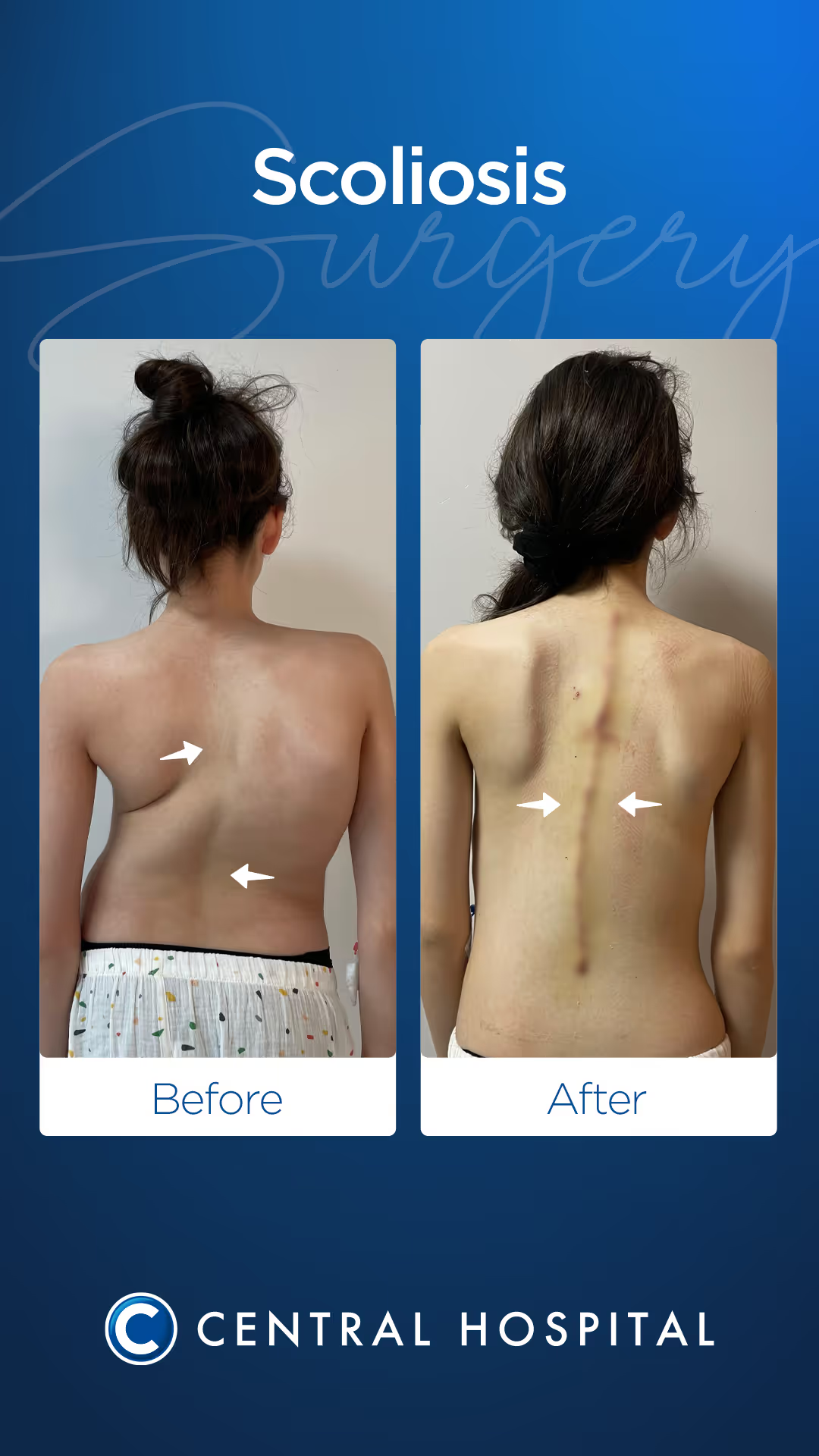
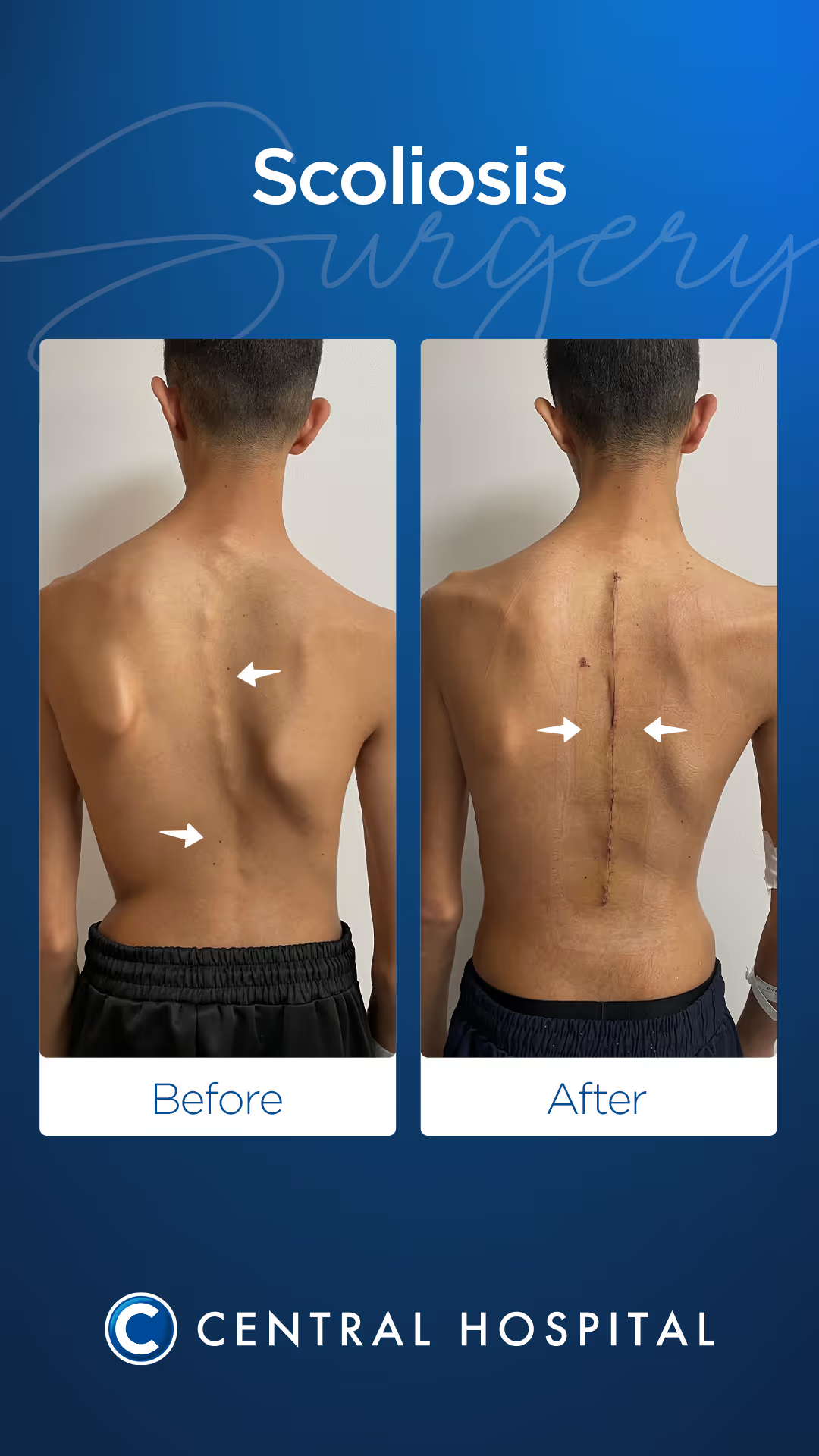
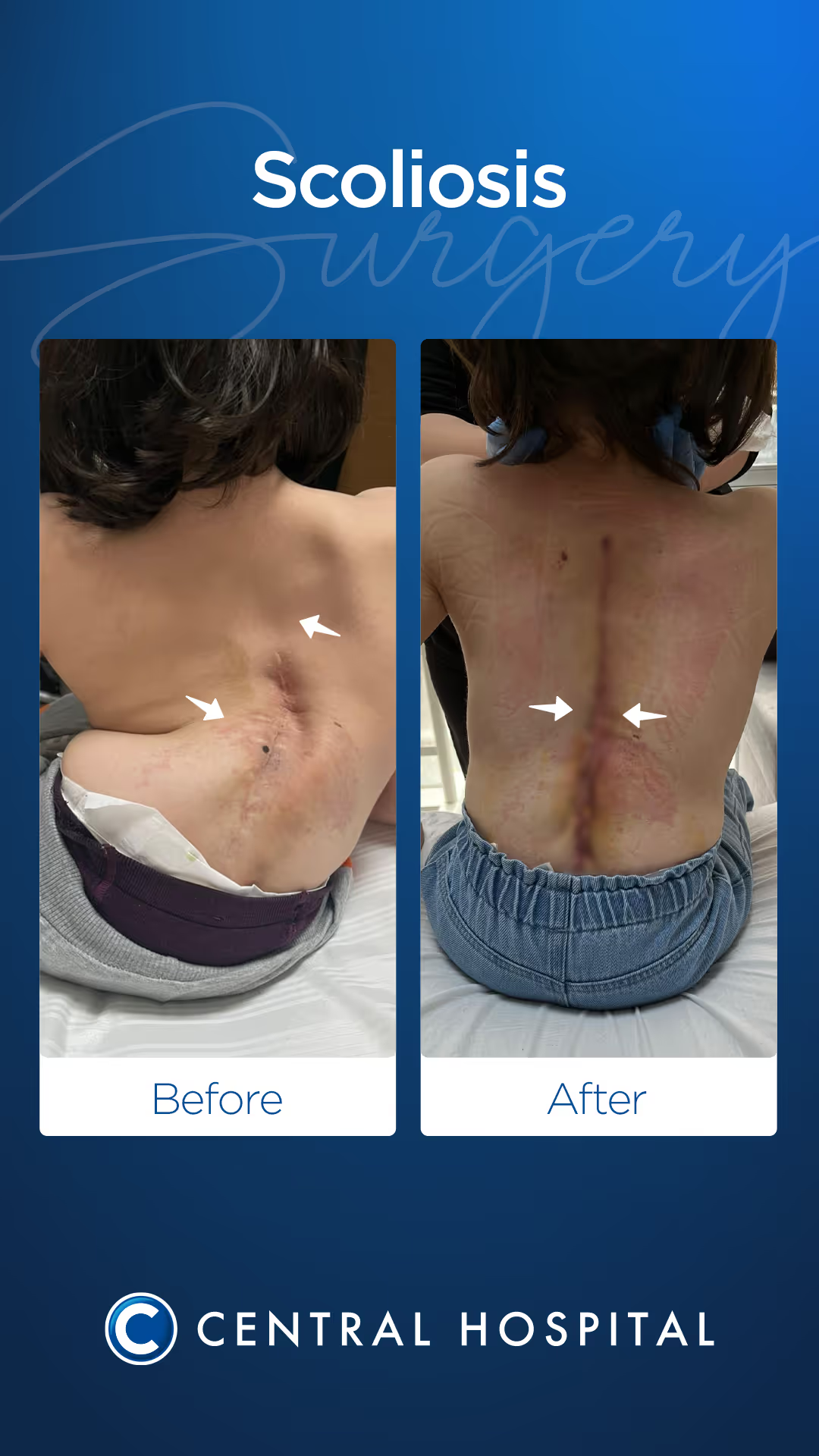
Scoliosis surgery is considered in certain cases where the curvature is significant, carries a risk of progression, or has a substantial impact on the individual's spinal balance and quality of life.
The progression of the curvature is particularly important in children and adolescents who are still growing. Patient information provided by the Scoliosis Research Society indicates that surgical treatment may be considered for curvatures exceeding approximately 45–50 degrees or in certain patients with a high risk of progression.
However, the decision for surgery is not based solely on the Cobb angle. The patient's age, growth status, type of curvature, rate of progression, spinal balance, and overall health are all evaluated together.
In adults, surgical treatment may be considered in cases such as pain that severely affects daily life, spinal imbalance, symptoms related to nerve compression, or loss of function that persists despite other treatments.
What methods are used in scoliosis surgery?
The choice of surgical method is determined based on the type of scoliosis, the degree of curvature, the patient's age, and the developmental status of the spine.
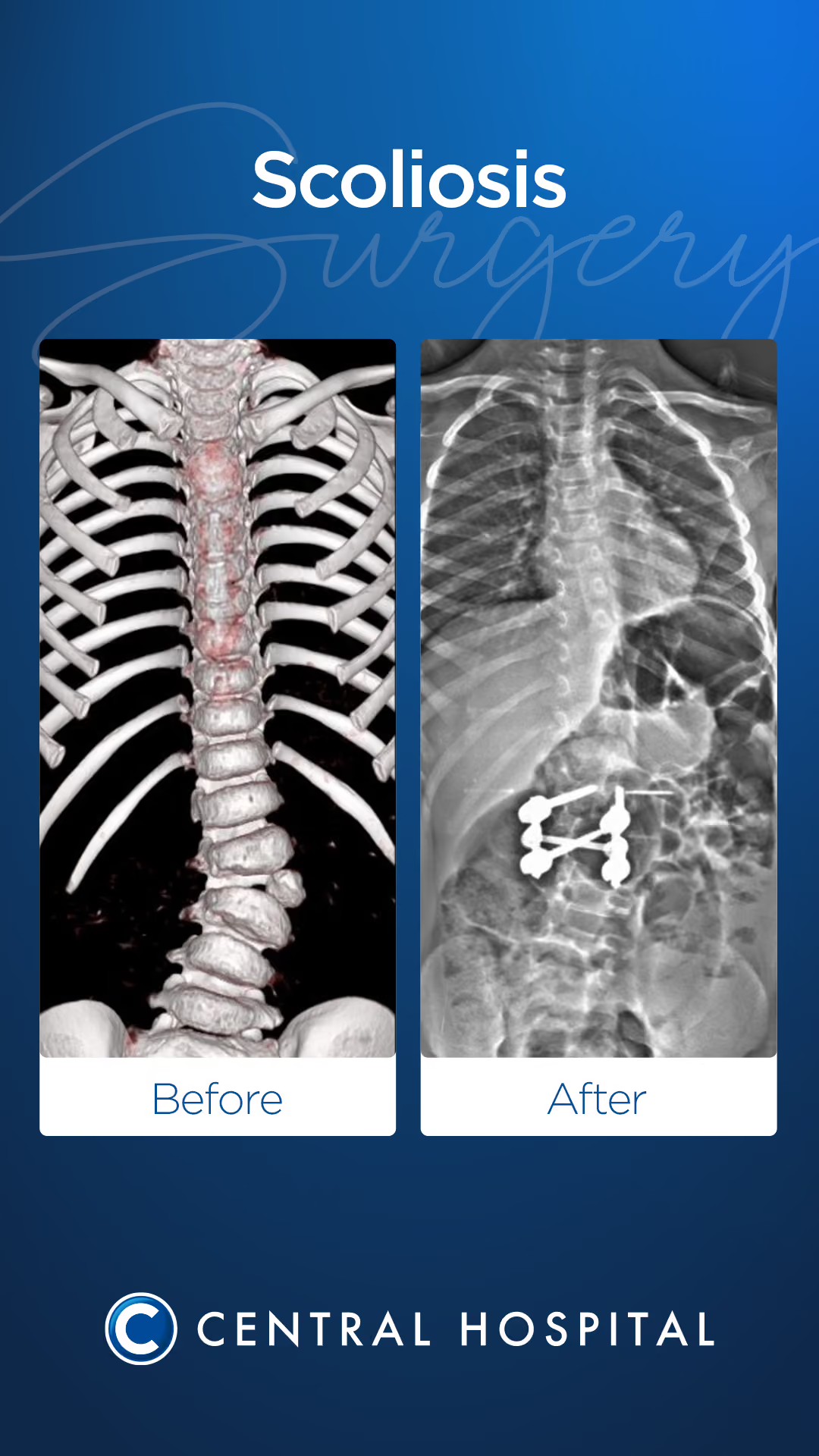
In some patients, instrumentation and fusion methods aimed at correcting the spine and maintaining this position can be used. Implants such as screws and rods may be utilized in these procedures.
For young children who are still growing, growth-friendly surgical methods that aim to preserve spinal growth as much as possible may be considered. Systems such as "Growing Rods" are among the approaches that aim to control the curvature while allowing the spine to grow in suitable patients.
Not every surgical method is suitable for every patient. The scope of the surgery, potential risks, the recovery process, and expected outcomes should be discussed in detail with the patient and their family.
Scoliosis in Children
Early detection of scoliosis in children is important for assessing the risk of curvature progression. Spinal curvature can change, especially during periods of rapid growth.
Scoliosis in children often does not cause significant pain. Parents may notice differences in shoulder levels, shoulder blade asymmetry, uneven waist indentations, or a prominence on one side of the back when the child bends forward.
The treatment plan is created based on the child's age, skeletal development, Cobb angle, and the progression of the curvature. While monitoring is sufficient for some children, bracing, scoliosis-specific exercises, or surgical treatment may be considered for others.
Scoliosis in Adults
Scoliosis in adults can occur due to a curvature that persists from childhood or adolescence, or it may develop as a result of degenerative changes in the spine associated with aging.
In adult scoliosis, symptoms such as back and lower back pain, loss of trunk balance, limited mobility, or leg pain due to nerve compression may occur.
The treatment plan is determined based on the patient's symptoms, spinal balance, characteristics of the curvature, and overall health. Surgery is not required for every adult scoliosis patient. Non-surgical treatments and regular follow-ups may be considered for suitable patients.
Why is Early Evaluation Important in Scoliosis?
Early detection of scoliosis, especially in growing children, helps in monitoring the risk of curvature progression and determining the appropriate timing for treatment.
A specialist evaluation should be performed when noticeable asymmetry in posture is detected, differences in shoulder or hip levels are observed, or if there is a suspicion of scoliosis.
It should be kept in mind that scoliosis does not follow the same course in every patient. A personalized follow-up and treatment plan helps prevent unnecessary interventions and ensures that the required treatment is applied at the right time.
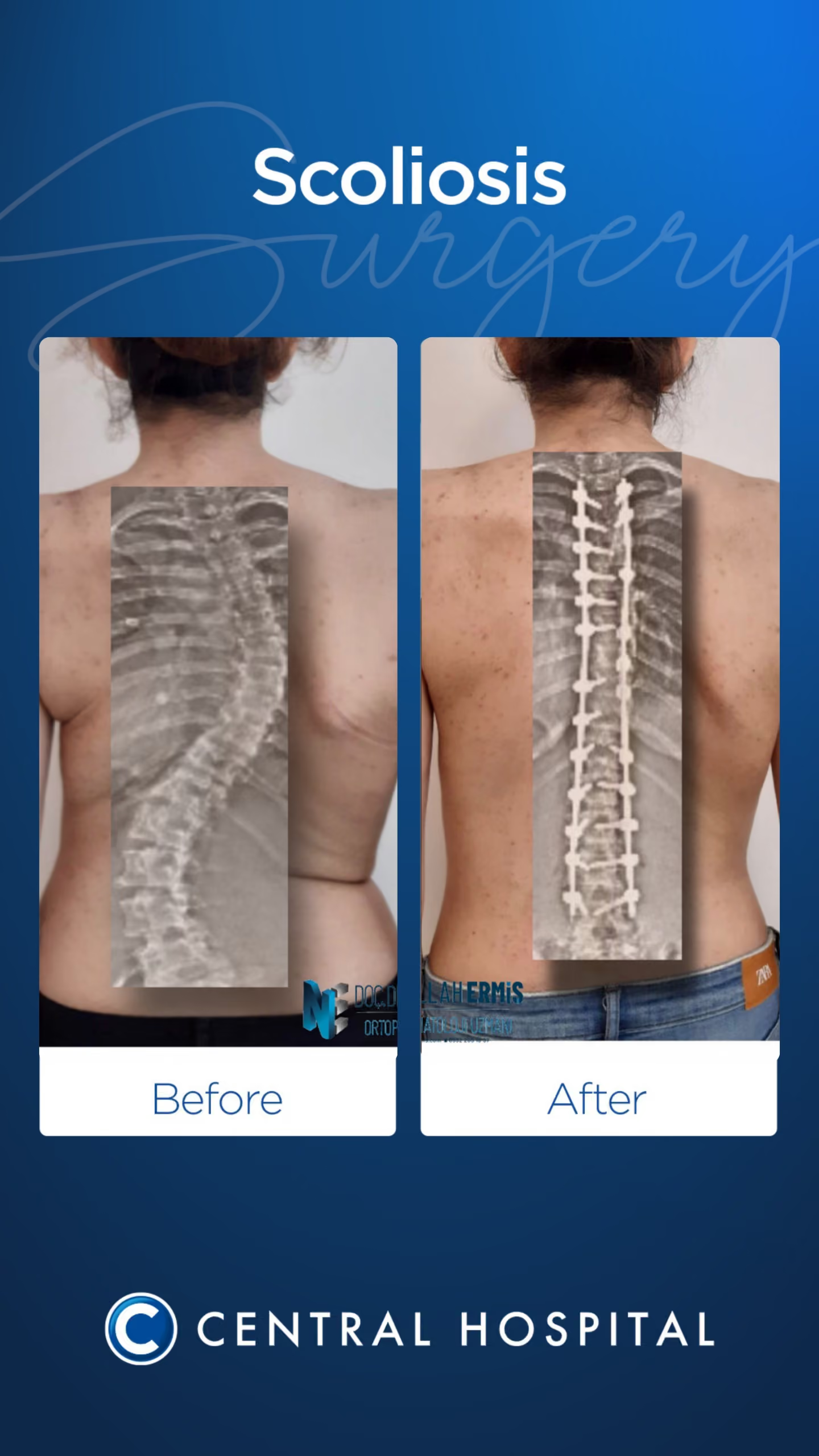
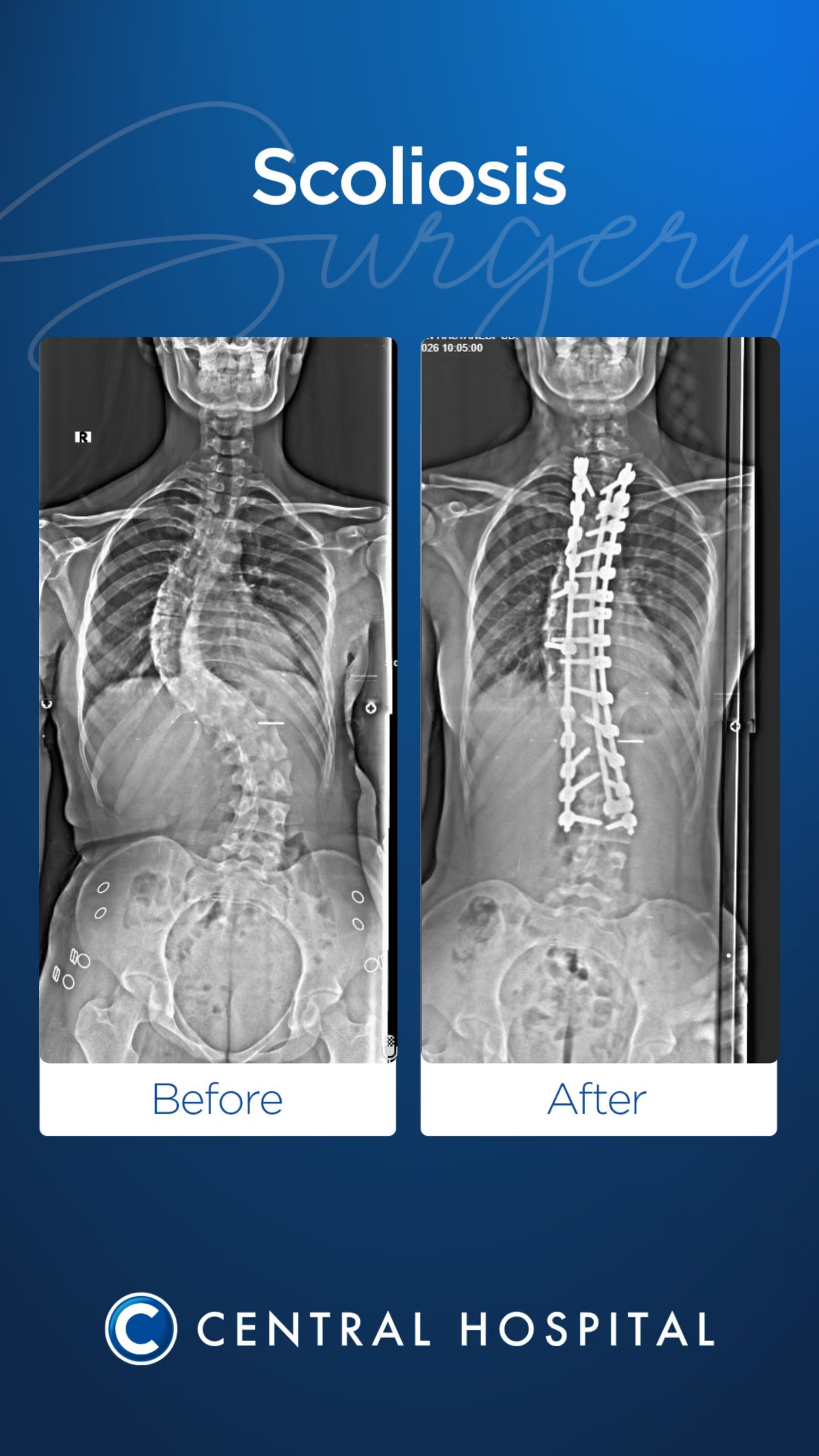
Hastalarımızın Öncesi ve Sonrası


Doctors in our unit
Easily find the doctor who best suits your needs, take a healthy step with expert support.







FAQS
We have put together frequently asked questions so that we can help you better. You can easily find the information you are looking for below
Do you still have something on your mind?
We're here! You can contact us to help you as soon as possible.