

What Are the Differences Between Scoliosis and Kyphosis?
The spine is a vital structure that allows the body to stand upright, move, and maintain daily life activities in a healthy way.
.avif)


Publication Date:
19/8/2026 10:17 AM
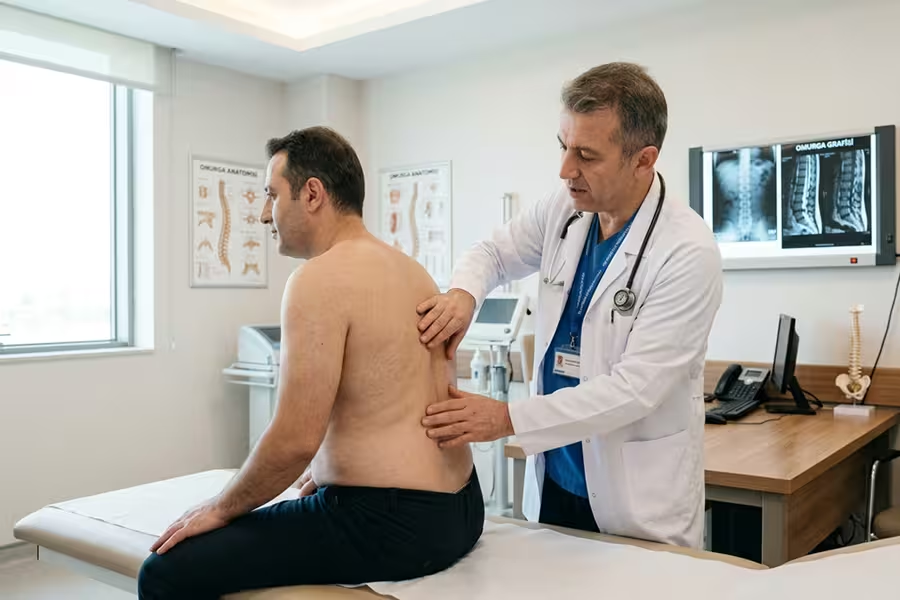
Natural curvatures of the spine are considered normal; however, when these curvatures exceed normal limits, they can lead to various spinal issues. Scoliosis and kyphosis are two different spinal problems that are frequently encountered in society and are sometimes confused with each other.
What is Scoliosis?
Scoliosis is a three-dimensional spinal deformity that can occur when the spine curves to the side when viewed from the front or back, and the vertebrae rotate around their own axes. Uneven shoulders or hips, a torso leaning to one side, and one side of the back appearing more prominent when bending forward are among the signs of scoliosis that may be noticeable.
What is Kyphosis?
Kyphosis is a condition where the natural forward curvature of the spine, particularly in the upper back, is greater than normal. It is sometimes referred to colloquially as a "hunchback." Kyphosis can result from structural changes during growth periods, poor posture, spinal fractures, or certain spinal diseases.
Key Differences Between Scoliosis and Kyphosis
The most obvious difference between the two conditions is the direction and shape of the spinal curvature. In scoliosis, the spine may show a lateral curve when viewed from the front or back, and rotation of the vertebrae may occur. In kyphosis, the forward curvature of the spine, especially in the upper back, increases. This can result in a noticeably rounded back appearance. In short: • Scoliosis: Characterized by a lateral curvature of the spine and potential accompanying rotation. • Kyphosis: Associated with an increased forward curvature, particularly in the upper back. • Both conditions can have different causes and types that progress at different rates. • Some individuals may have both scoliosis and kyphosis simultaneously.
How to Recognize the Symptoms?
The symptoms of scoliosis and kyphosis can vary from person to person. In the early stages, there may be no pain or obvious complaints. Therefore, it is important to notice changes in physical appearance.
Signs That May Be Seen in Scoliosis
• One shoulder appearing higher than the other • Shoulder blades at different levels • Asymmetry in the waistline or torso appearance • Hips appearing at different levels • One side of the back becoming more prominent when bending forward • Pain in the back or lower back area in advanced cases
Signs That May Be Seen in Kyphosis
• Noticeable forward curvature in the upper back • A hunched-forward posture • Shoulders rolling forward • Pain or fatigue in the back and lower back area • Limited spinal mobility • Difficulty with daily movements in severe cases. The presence of one of these symptoms does not automatically mean a diagnosis of scoliosis or kyphosis. A medical examination is required for an accurate assessment.
How is it Diagnosed?
Individuals suspected of having scoliosis or kyphosis are first evaluated by a physician. During the examination, the posture of the spine, shoulder and hip levels, torso symmetry, and spinal movements may be assessed. When necessary, imaging methods such as standing spinal X-rays may be used. Once the type and degree of the curvature are determined, an appropriate follow-up or treatment plan is developed by considering the individual's age, growth status, symptoms, and the characteristics of the curvature.
Is Treatment the Same for Every Patient?
Treatment for scoliosis and kyphosis varies depending on the degree of the curvature, its cause, the individual's age, growth potential, symptoms, and the risk of progression. For some, regular follow-up may be sufficient. In appropriate patients, physical therapy and exercise programs or bracing may be considered. Surgical treatment may be an option for advanced cases, those with a high risk of progression, or those with specific structural features. Therefore, it is not correct for individuals to determine their own treatment methods based on information found on the internet.
Why is Early Evaluation Important?
Since spinal development continues, especially during childhood and adolescence, it is important to evaluate any emerging curvatures in a timely manner. If parents notice a significant difference in their child's shoulder or hip levels, asymmetry in the torso, or a noticeable change in the back area, it is beneficial to consult an orthopedics and traumatology specialist or a relevant spine expert.
Scoliosis or Kyphosis? The Most Important Difference
Scoliosis and kyphosis are not the same condition. Scoliosis is primarily associated with a sideways curvature of the spine and rotation of the vertebrae, while kyphosis is related to an increased forward curvature, particularly in the upper back. Both conditions can develop due to various causes and can range from mild to severe. Therefore, it is not possible to make a diagnosis based solely on appearance or symptoms. According to the specialists in Orthopedics and Traumatology at Central Hospital, early awareness and accurate assessment of spinal curvatures like scoliosis and kyphosis play a crucial role in successfully planning the treatment process. It is especially important to evaluate spinal curvatures detected during childhood and adolescence in a timely manner to determine the characteristics of the curvature and plan appropriate treatment options when necessary. Spinal curvatures can progress differently in each individual. For this reason, an evaluation by a specialist physician based on the person's age, the degree of the curvature, its cause, and existing complaints is required. If you notice any changes in yourself or your child that might indicate a spinal curvature, you can consult the Orthopedics and Traumatology department at Central Hospital for a professional assessment.
Doctors in our unit
Easily find the doctor who best suits your needs, take a healthy step with expert support.








FAQS
We have put together frequently asked questions so that we can help you better. You can easily find the information you are looking for below
Do you still have something on your mind?
We're here! You can contact us to help you as soon as possible.