

Hidden Danger: Sleep Apnea
Sleep apnea is one of the most common, yet insidious, health problems in the modern world.



Publication Date:
16/4/2026 9:35 AM
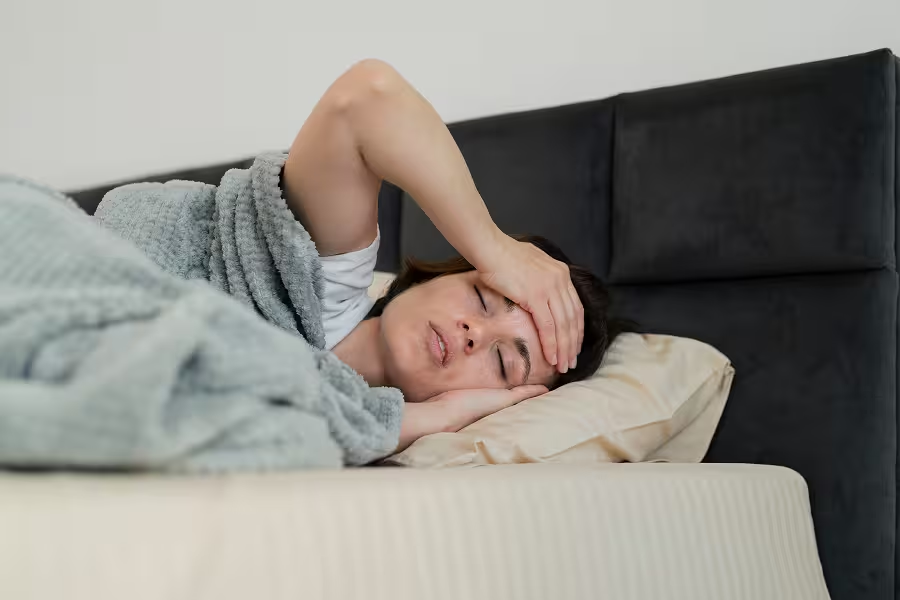
Sleep apnea is one of the most common, yet insidious, health problems in the modern world. Described as involuntary stopping or shallowness of breathing during sleep, this disorder is not just a “snoring problem”; it is a serious medical condition that directly affects vital organs when left untreated.
What Is Sleep Apnea?
Sleep apnea is a cycle in which the level of oxygen decreases as a result of which the upper respiratory tract is closed during sleep and the brain awakens the body, noticing this condition (micro-awakenings). There are three main types:
- Obstructive (Obstructive) Sleep Apnea: It is the most common type; it is the physical closure of the airway with relaxation of the throat muscles.
- Central (Central) Sleep Apnea: A condition in which the brain is unable to send the right signals to the respiratory muscles.
- Compound Sleep Apnea: It is a combination of both obstructive and central factors.
Symptoms: What is your body telling you?
People with sleep apnea are often unaware of the condition; the symptoms are often noticed by partners.
What are the symptoms of the night?
• Witnessed Apnea: Observation by someone else that breathing stops during sleep.
• Feeling of suffocation: Awakening or sighing suddenly at night, gasping for breath.
• Excessive Sweating: Night sweats, especially in the neck and chest area.
• Frequent Urination: Night visits that cause splitting of sleep.
What are Daytime Symptoms?
• Dry mouth: Feeling of burning or excessive dryness in the throat in the morning.
• Daytime Somnolence: Irresistible desire to sleep, which can occur even when reading the newspaper or driving.
• Mood Changes: Depression, irritability and anxiety due to constant fatigue.
Who is in danger?
Sleep apnea can occur at any age, but some factors significantly increase the risk:
• Neck Circumference Width: Thick neck structure can cause the airway to become narrower.
Gender: Men are 2-3 times more likely to occur than women.
• Anatomical Structure: Genus flesh, large tonsils or narrow palate structure.
• Substance Use: Alcohol and tranquilizers relax the throat muscles, triggering apnea.
Risks that can occur if left untreated
The fact that the body does not receive enough oxygen during the night creates a huge stress on the organs. This condition invites the following diseases:
• Cardiovascular Problems: Risk of heart attack and sudden cardiac arrest.
• Metabolic Disorders: Type 2 diabetes and insulin resistance.
• Liver Problems: Liver greasiness and enzyme disorders.
• Operation Risks: Difficulty breathing in situations requiring general anesthesia.
Modern Methods of Treatment and Remedies
The good news is that sleep apnea can be completely controlled with the right diagnosis.
- Gold Standard: CPAP Device: Provides continuous positive air pressure with the help of a mask, preventing the airway from closing.
- Surgical Intervention: Anatomical solutions such as soft tissue reduction, correction of nasal bone curvature (septoplasty) or jaw surgery.
- Sleep Hygiene and Lifestyle: * Achieving the ideal weight (can reduce the severity of apnea by up to 50%) .o Prefer the “side bed” position instead of lying on your back.o Stop alcohol intake 4-5 hours before sleep.
Doctors in our unit
Easily find the doctor who best suits your needs, take a healthy step with expert support.






FAQS
We have put together frequently asked questions so that we can help you better. You can easily find the information you are looking for below
Do you still have something on your mind?
We're here! You can contact us to help you as soon as possible.