

Athlete Health
Athlete health should be assessed according to the sport performed and the frequency of training...


Publication Date:
13/6/2026 5:27 PM
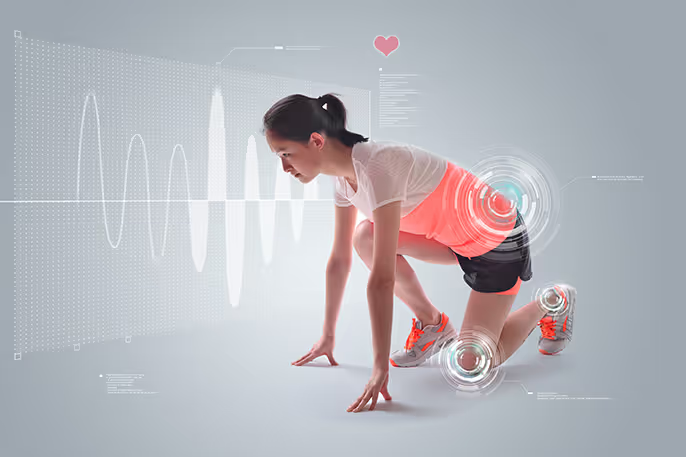
Whether amateur or professional, a nutrition plan should be made according to the weight of the sport, the frequency of training and the calories expended, the vitamin and mineral requirements should be adjusted, regular health checks should be carried out and examinations should be planned, which should be taken special care of in the check-ups. In short, athlete health should be evaluated according to the sport performed and the frequency of training.
Athletes primarily need to replace the energy they expend. Lost energy that is not replaced results in weight loss, loss of strength and strength. Malnutrition, emptying of carbohydrate stores also increase the risk of injury to the athlete. An athlete who has not established the energy balance well will not be able to perform the expected performance. Athletes with a well-established energy balance should be rich in carbohydrates (sugary foods-drinks, bread, pasta, rice...) regardless of which branch (speed, strength or endurance) they receive. 60-65% of the total calories ingested in an athlete's diet should contain carbohydrates, 15-25% protein, and 15-25% fat. It should also be noted that the ingested food is easy to digest. For a balanced and adequate preparation of the athlete's diet, it is the most correct approach to seek help from a dietitian specialist in this matter.
Fluid intake in athlete nutrition is another important issue. Dehydration of the body (dehydration) is one of the most important points that makes the athlete powerless. Malnutrition, insufficient fluid intake and insufficient rest and sleep are the most important factors affecting the performance of the athlete. Having one or more of these causes poor performance, muscle stiffness and, in some people, digestive system problems.
Low urination and dark urine are the most important indicators of insufficient fluid intake. It is necessary to continue to make fluid support until the color of urine opens. By weighing before and after training, we can understand how much fluid we lose during the work. Fluid loss with normal fountain water, juice, sports drinks, etc., should be replaced urgently.
Especially athletes of the age of growth development need to eat a lot of meat and meat products. This thought is wrong. As I mentioned above, the athlete's diet should contain predominantly carbohydrates. The athlete's diet should be balanced and include a variety of nutrients.
Vitamin and mineral supplements provide the body with additional energy. This thought is also wrong. It does not provide additional energy. Athletes need slightly more vitamins and minerals compared to their peers. They can make up for this deficit to a large extent by eating more than their peers. They do not need to take additional vitamins. If the athlete is a vegetarian (does not eat red meat), the athlete must meet the need for iron with other iron-containing foods (such as beans), as well as for amino acids with legumes. Similarly, calcium-containing milk, yogurt and cheese (preferably low-fat) should be consumed several times a day. Nutritionally challenged athletes of growing age (who choose nutrients, do not eat vegetables and fruits) can close vitamin deficits by taking multi-vitamin preparations made for children several times a week. As a result, athletes other than athletes who are considered/identified as having a vitamin and mineral deficit do not need to take additional vitamins and minerals.
Does the use of creatine phosphate contribute to peformansa? Today, creatine phosphate, which is often used by athletes, is our body's main source of energy for short-term (a few seconds) activities. Having full creatine stores gives an advantage in short-term activities (such as short distance running, swimming) or activities in which multiple sprints are thrown (such as football, basketball). Scientific studies carried out so far are water in the body
What is exercise-induced cramp (EKK)? It is the name given to cramps that occur as a result of exercise performed during or after exercise. It involves painful involuntary contractions of the skeletal muscle. Muscle pain is a condition characterized by dysfunction, muscle damage, and loss of performance. Although ECK has similarities with other medical problems such as complaints (such as neurological, circulatory, metabolic, mineral deficiency), its course, causes and treatment differ.
What is the incidence of ECK in athletes? In particular, in long-term endurance activities such as marathon, triathlon, and road cycling, ECK has been reported at rates of up to 67% (1-4). For team sports, this rate is between 30-50% (5-7).
How can it be protected from ECK?
- Warm up well before exercise (until you sweat) and stretching the muscles that will work afterwards,
- Starting the exercise with a low tempo instead of a high tempo, gradually increasing the tempo,
- In activities that involve high intensity contractions of a repetitive type (for example, plyometric exercises, rebounds, dunks, hitting the ball with the head or foot, etc.), give the muscles a chance to relax and rest, prevent muscle fatigue, stretch in between,
- constant lack of load on the same muscle groups in workouts,
- Solve anatomical problems (such as flat or high soles) and correct running/walking techniques,
- not to neglect periods of rest (regeneration) in training programs to avoid excessive muscle fatigue,
- Doing stretches to working muscles following training/activity
- Filling the empty tanks with good nutrition and getting enough fluids through exercise
- It is possible to be protected from ECK by rest and quality sleep.
Is there a cure for ECG?
If you experience exercise-induced cramps despite the prevention practices mentioned above:
- First of all, to rest,
- Eating well, filling slimming stores, closing fluid deficits
- Doing a lot of stretching after warming up the muscles involved (stretching when the body is cold, on the contrary, leads to a shortening of the muscle's height and increasing complaints. What is sudden death in sports?
It is the definition given to deaths that occur during sporting activity or in the hour that follows without any trauma.
FAQS
We have put together frequently asked questions so that we can help you better. You can easily find the information you are looking for below
Do you still have something on your mind?
We're here! You can contact us to help you as soon as possible.