

Which Bread is Healthier? What You Need to Know for the Right Bread Choice
Bread has remained a fundamental part of dietary culture for centuries. This staple, consumed at many meals from breakfast to dinner, now comes in a wide variety of forms.


Publication Date:
19/8/2026 10:17 AM
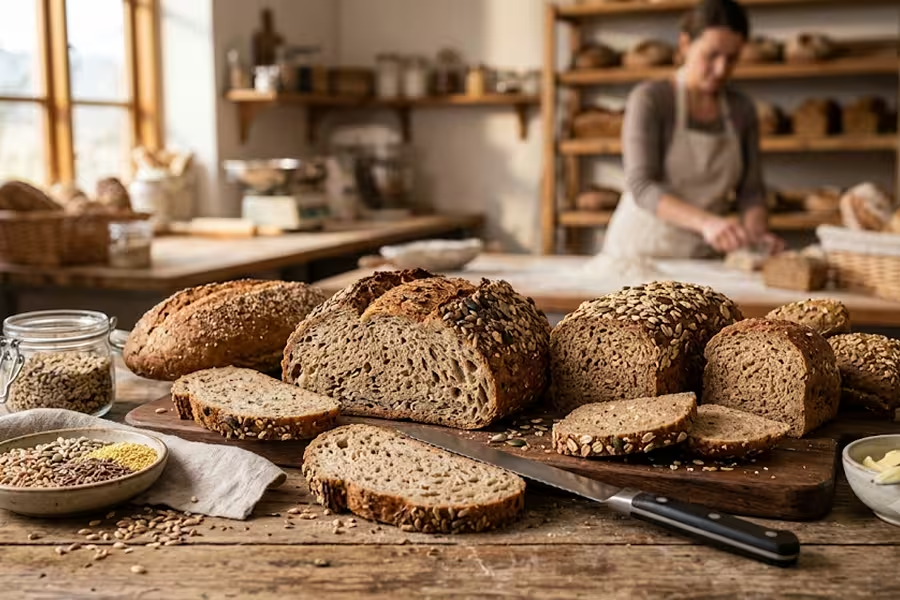
With the increasing options like whole wheat, whole grain, rye, einkorn, buckwheat, sourdough, and gluten-free breads, this naturally raises the question: Which bread is truly the healthiest?
There isn't one single correct answer to this question. The most suitable bread choice can vary depending on age, daily activity level, health status, dietary habits, and personal needs. For instance, the bread preferred by someone with diabetes might not be the same as that chosen by a celiac patient, or by an intense athlete compared to an individual trying to lose weight.
Nevertheless, when considering general nutritional recommendations, breads made from whole grains, high in fiber, and free from added sugar and unnecessary additives are generally considered more beneficial. These types of bread can provide satiety for longer, support the digestive system, and contribute to a balanced diet.
How to Identify Healthy Bread?
When evaluating whether a bread is healthy, simply looking at the calorie count is not enough. Its ingredients and production method are just as important as its caloric value.
- Made from whole grains
- High fiber content
- Minimal use of refined flour
- No added sugar
- Free from unnecessary additives
- Rich in vitamins and minerals
- Helps to raise blood sugar more steadily
It may not always be possible to find all these characteristics in a single bread. Therefore, when making a choice, it is important to examine the product label and read the ingredients list.
White Bread
White bread is one of the most commonly consumed types of bread because it is made from refined wheat flour. Its soft texture and mild taste make it a preferred choice for many.
One of its main advantages is that it's easy to consume and provides quick energy. For some people, it may also be easier to digest.
However, because refined flour is used, its fiber content is low. Consequently, it can raise blood sugar more quickly than whole grain breads, and the feeling of fullness may last for a shorter period. Furthermore, it is poorer in certain nutrients like B vitamins, iron, and magnesium compared to whole grain alternatives.
Whole Wheat Bread
Whole wheat bread is prepared using all parts of the wheat kernel: the bran, endosperm, and germ. This gives it a higher nutritional value compared to white bread.
Its high fiber content can help you feel full longer. When consumed regularly, it can support bowel movements... and contribute to a reduced risk of constipation. It is also a richer option in terms of B vitamins and minerals like magnesium, zinc, and iron.
It is also one of the frequently recommended types of bread for healthy individuals, as well as those mindful of weight management, people at risk of diabetes, and those who prefer a heart-healthy diet.
Whole Grain Bread
Whole grain bread is not made solely from whole wheat. It can also contain oats, barley, rye, and other whole grains. This variety increases its nutritional value.
Its high fiber content supports the regular functioning of the digestive system while providing a longer-lasting feeling of fullness. At the same time, due to its richness in vitamins and minerals, it is considered an important part of a balanced diet. The fibers it contains can also contribute to supporting the gut microbiota.
Which Bread is More Suitable for Diabetics?
For individuals diagnosed with diabetes, breads that are high in fiber and can raise blood sugar more slowly may be more suitable.
Commonly preferred options:
- Whole wheat bread
- Whole grain bread
- Whole rye bread
- Sourdough whole grain bread
Which Bread Should Those Who Want to Lose Weight Choose?
During the weight loss process, choosing the right bread in the right amount, rather than completely eliminating it, is a more sustainable approach.
Breads with a high fiber content can provide longer-lasting fullness, helping to control daily energy intake.
What is the Healthiest Bread for Children?
For children in their growth and development stages, whole grain breads can provide significant contributions in terms of vitamins, minerals, and fiber.
However, choices should be made appropriate for the child's age and eating habits; a monotonous diet should be avoided.
What to Look For When Reading Labels?
When buying bread, it is recommended to pay attention to the following points:
- Low amount of added sugar
- Limited additives
- High fiber content
- Low salt content
In healthy eating, what's important is not just whether you consume bread or not; it's choosing the right bread, in appropriate amounts, and as part of a balanced diet.
Generally, whole wheat, whole grain, whole rye, and natural sourdough whole grain breads are among the more nutritious options due to their fiber, vitamin, and mineral content. In contrast, white bread has a lower fiber content, which means it may keep you full for a shorter period and can raise blood sugar more quickly.
Every individual's nutritional needs are different. For people with diabetes, celiac disease, kidney disease, or any health condition requiring a special diet, making bread choices in line with a doctor's or dietitian's recommendations would be the most appropriate approach.
FAQS
We have put together frequently asked questions so that we can help you better. You can easily find the information you are looking for below
Do you still have something on your mind?
We're here! You can contact us to help you as soon as possible.