

What Is Migraine And How To Deal With Migraine
Migraine is often thought of as 'just a headache', but it's actually a much more complicated condition than that.



Publication Date:
17/4/2026 10:11 AM
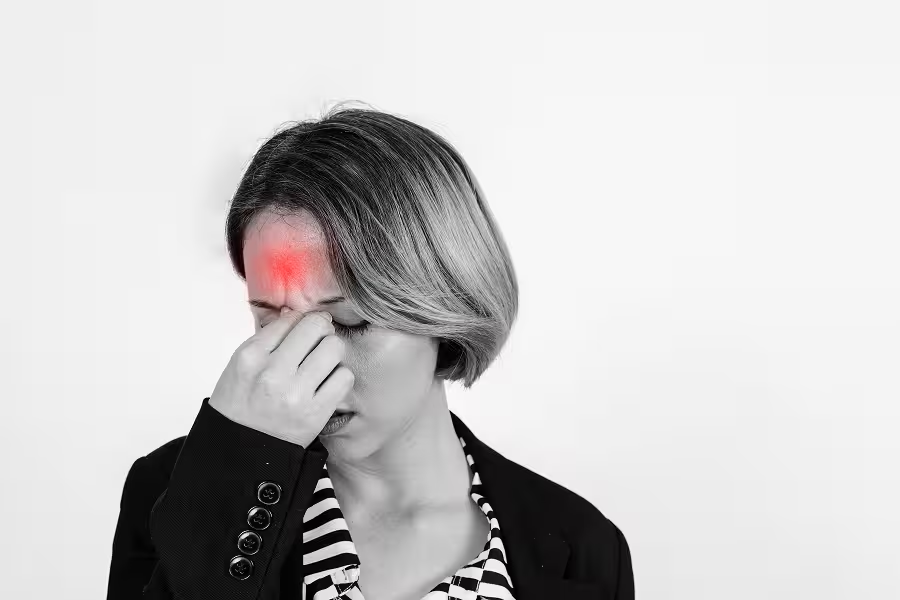
The lights are too bright, the sounds too loud, and the smells can feel unbearable. If these feelings are familiar to you, a migraine may have knocked on your door.
Migraine is often thought of as 'just a headache', but it's actually a much more complicated condition than that. Medically, Migraine is considered a neurological disease associated with the brain's pain-processing mechanisms, nervous system sensitivity, and even vascular structures. For a migraine sufferer, even ordinary stimuli such as light, sound or smell can become a trigger.
In its simplest form, migraine is a hypersensitive reaction of the brain to environmental factors. But this reaction can turn into a picture that is much more intense than an ordinary headache and affects the quality of life. Attacks can last for several hours, as well as for days in some people.
Migraine often progresses in stages. Some people may experience visual or sensory symptoms called “auras” before the pain begins. Symptoms such as seeing flashes of light, blurred vision, or numbness in the hand may indicate this stage.
The Most Common Symptoms of Migraine
Before or when a migraine comes, your body sends you various signals. The most common are:
• Throbbing sensation: A rhythmic pain as if feeling your heartbeat in your head
• Unilateral pain: Usually concentrated on the right or left side of the head
• Light and sound sensitivity: Even a dim light can disturb, small sounds sound like they are magnified
• Nausea and vomiting: It is especially common in severe attacks
• Sensitivity to smell: Perfume, the smell of food or even cleaning products can be unbearable
• Weakness and difficulty concentrating: It can become difficult to do everyday tasks
Factors Triggering Migraine
Migraine attacks usually occur with certain triggers. Recognizing them and controlling them as much as possible plays an important role in reducing the frequency of attacks:
• Irregular sleep (sleeping too little or too much)
• Going hungry or skipping meal• Stress and sudden stress discharge
• Hormonal changes• Bright lights and intensive screen use
• Strong fragrances
• Excess caffeine or sudden cessation
How to Treat Migraine?
It may not always be possible to completely eliminate migraine, but it is possible for most people to control it with the right methods.
- Drug treatmentPainkillers recommended by your doctor or special drugs aimed directly at stopping a migraine attack (for example, the triptan group) are quite effective. It is very important to take these drugs at the right time.
- Lifestyle changesOne of the most powerful weapons in the fight against immigration are daily habits:
• Regular and quality sleep• Adequate water consumption• Balanced diet• Limiting screen time• Stress management (such as breathing exercises, walking, meditation)
What to Do During a Migraine Attack
It is quite understandable to want to stop the world when that severe pain begins. To relax yourself a little more in these moments, you can try these methods:
• Switch to a dark and quiet environment: close the curtains, reduce the light
Try to sleep: A short sleep can shorten the duration of an attack
Drink plenty of water but slowly: Thirst can increase pain
• Apply cold compress: Cold cloth placed on forehead or neck can be relaxing
• Stay away from smells: Getting fresh air is often good
• Stay away from screens: Phone and computer light can make the situation worse
We know you want to stop the world when that severe pain starts. Here's what you can do to feel a little better in those moments:
- Escape Darkness and Silence: Immediately close the curtains, turn off the lights and move into a quiet room.
- Try to Sleep: If you can succeed, a short sleep is the most effective way to get through a migraine attack.
- Don't be dehydrated: Drink water slowly. Being dehydrated can trigger pain.
- Stay Away From Smells: The smell of perfume, food or cigarettes is your biggest enemy at that moment; try to get fresh air.
Doctors in our unit
Easily find the doctor who best suits your needs, take a healthy step with expert support.



FAQS
We have put together frequently asked questions so that we can help you better. You can easily find the information you are looking for below
Do you still have something on your mind?
We're here! You can contact us to help you as soon as possible.