

The Journey of the Spine: The Right Exercise Approach in Type C and S Scoliosis
Spine health is one of the most fundamental elements that determine our quality of life. But sometimes our spine can deviate from its ideal straight line for genetic or developmental reasons.
.avif)


Publication Date:
4/4/2026 11:02 AM
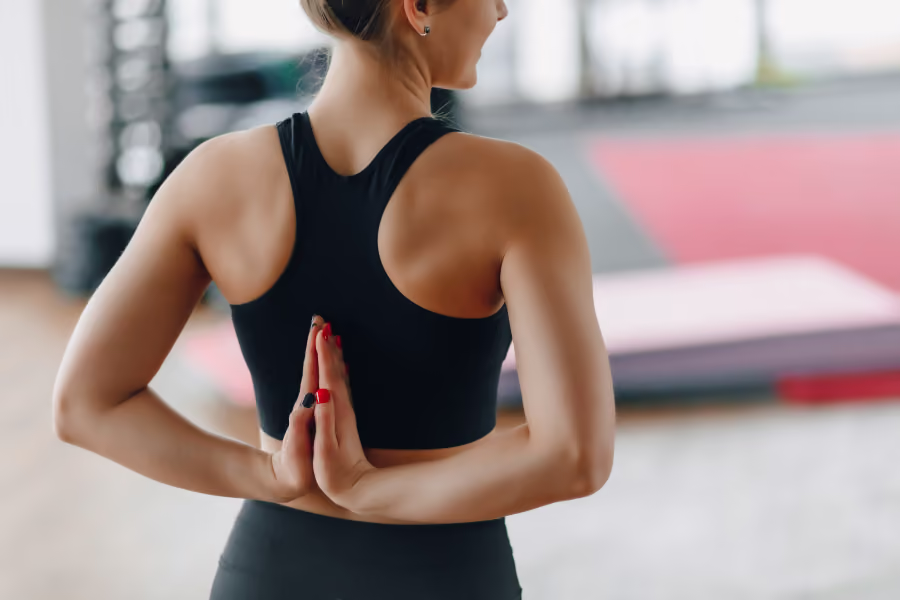
Spine health is one of the most fundamental elements that determine our quality of life. But sometimes our spine can deviate from its ideal straight line for genetic or developmental reasons. This condition, known as scoliosis, requires different approaches according to the shape of the curvature.
C-Shaped Scoliosis: Unidirectional Curvature
C-shaped scoliosis is when the spine curves in one direction (right or left), like a letter. This type, which can be seen in the neck, back or waist area, often signals with pronounced asymmetries in the external appearance of the body.
What are the symptoms?
- Shoulder Imbalance: Stopping one shoulder higher than the other.
- Scapillary Protrusion: That a scapula is more pronounced.
- Waist Curl Difference: The fact that the groove on one side of the waist is deeper.
Exercise Strategy: Balancing Strength
In type C scoliosis, the main logic is asymmetric work. The goal is to strengthen the weak muscles on the inward side of the curvature, while flexing the tense muscles on the external bending side.
- Focal Point: Unilateral arm/leg lifting movements and scapula stabilization.
- Conclusion: The muscles that support the spine are activated, the awareness of posture (posture) increases.
S-Shaped Scoliosis: Complex Structure with Double Curvature
S-shaped scoliosis is when the body forms another curvature in the opposite direction in another area in order to find balance, in response to the curvature in one area of the spine (Compensation). It usually affects the back and waist area at the same time. The body forms a second arc, trying to keep the head in the middle line. This requires more detailed and individual planning of the treatment process.
Exercise Strategy: Coordination and Flexibility
In S-type scoliosis, only strength is not enough; balance and mobilization are in the foreground.
- Breath Awareness: With breathing exercises, it is critical to expand the ribcage and increase spine mobility.
- Mirror Facing Alignment: Visual awareness of one's own body balance gives the habit of correct posture in everyday life.
- Mobilization: In the crawling position (Cat-Cow such as) controlled movements relieve stiffened spinal segments.
The Importance of Exercise in Scoliosis
A regular and correctly planned exercise program is not only a physical activity, but also a long-term preventive treatment:
- Pain Management: Reduces chronic pain due to muscle imbalance.
- Stopping Progress: It can slow down the rate of increase of curvature, especially in the age of growth.
- Lung Capacity: Corrects asymmetry in the rib cage, allowing for more comfortable breathing.
- Self-confidence: A more upright and balanced posture increases one's comfort in social life.
Doctors in our unit
Easily find the doctor who best suits your needs, take a healthy step with expert support.








FAQS
We have put together frequently asked questions so that we can help you better. You can easily find the information you are looking for below
Do you still have something on your mind?
We're here! You can contact us to help you as soon as possible.