

A Guide to School Life in Children After Kyphosis and Scoliosis Surgery
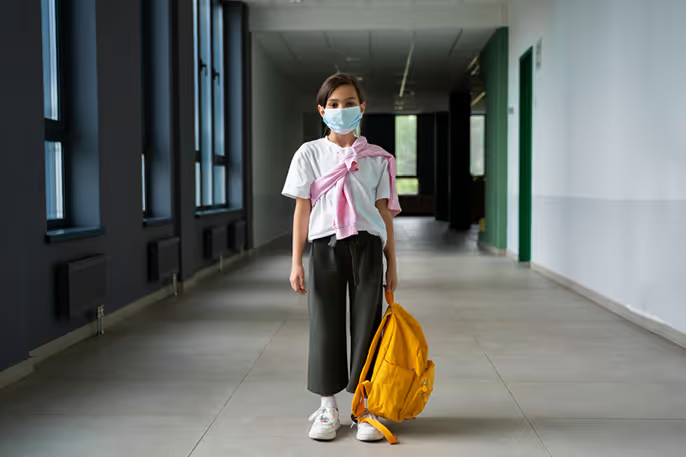
The time of return to school depends on many factors, such as the general state of health of your child, the complexity of the surgery, and the speed of recovery.


Publication Date:
10/12/2025 2:47 PM
Dear Families,
You have left behind perhaps one of the most important operations of their lives for your child. Surgery for kyphosis or scoliosis requires a long and painstaking recovery process. One of the most critical stages of this process is convert to school. As a traumatology and orthopedist, I know how important it is to work collaboratively so that this transition is as smooth as possible. In this article, I will try to answer all the questions that you wonder about school life after surgery.
Understanding the Post-Operative Recovery Process: When Is It Time to Go Back to School?
The time of return to school depends on many factors, such as the general state of health of your child, the complex site of the operation and the speed of recovery. Usually:
- 4-6 Weeks: This process passes, most often at home, with rest and controlled walks. It is an early period for the return to school.
- 6-12 Weeks: It is the critical stage of the boiling (fusion) process under the control of the physician. Part-time or full-time return to school may begin during this period, but restrictions must be strictly observed.
IMPORTANT NOTICE: The final decision on when your child will return to school will be made after checks by the doctor who performed his surgery. Please respect the natural course of healing, instead of waiting impatiently for this date.
Things to Do Before Going Back to School: Planning is Everything!
A successful transition is possible with a detailed planning made in advance.
- Interview with School Administration and Classroom Teacher: Be sure to arrange a meeting before returning to school. Describe the surgery, your child's limitations (not lifting heavy, bending over, sitting in the same position for a long time) and his needs in clear language.
- Medical Information Form: Get an official report from your doctor with your child's restrictions andprecautions that need to be taken at school. Forward this report to the school administration.
- Physical Arrangements
- Row and Chair: It should be ensured that the row in which your child will sit is comfortable and suitable for upright sitting, if necessary, to put lumbar support.
- Elevator Usage: If the school is on the floor, permission to use the elevator must be obtained.
- Classroom Changes: If possible, precautions should be taken so that classes are not changed or minimized.
- Bag Problem: It is one of the most critical issues after surgery. Collaborate with teachers to have a second set at school for heavy textbooks or use of digital materials. The bag in which the child will carry should be as light as possible, a school bag on wheels Its use should be strictly evaluated.
Things to Consider in School Life: The Golden Rules
- Body Training Lesson: At least 6 months after surgery, usually 9-12 months all contact sports, high-impact activities such as running, jumping and so on should be avoided. During these lesson hours, your child should do light activities such as simple walks recommended by the doctor under the supervision of a physical education teacher, or spend these hours resting.
- Inhalations: It is necessary to be careful of the risk of bumps and falls that can occur in crowded corridors. School staff should be informed about this.
- SeatOrder: Sitting motionless for a long time can cause discomfort. Ask the teacher for permission for your child to get up and take short walks every 20-30 minutes.
- Pain andFatigue: Fatigue in the first weeks is normal. Starting the school program part-time and increasing to full time over time can facilitate this process. Any pain complaints should be taken seriously and shared with your doctor.
Why Family, Teacher, and Physician Collaboration Is So Important
This process is critical for your child's physical health as well as for his or her psychological health. The support of teachers is indispensable so that he does not feel different from his peers, is not excluded and can adapt to school life. Teachers:
- In the classroom, protect your child from strenuous physical activities,
- It should create an understanding environment by raising awareness of other students,
- They must be flexible and supportive in the transition process with regard to their academic expectations.
Remember, kyphosis and scoliosis surgery is a very important step taken for your child to live a healthier and quality life. Managing the back-to-school process with physician, family, and school collaboration will ensure you get the best return on this investment.
I am with you in this special process of your child. I wish you healthy days.
FAQS
We have put together frequently asked questions so that we can help you better. You can easily find the information you are looking for below
Do you still have something on your mind?
We're here! You can contact us to help you as soon as possible.