

What Causes Styes? Symptoms and Treatment Methods
That small, painful bump that suddenly appears on the eyelid is a common occurrence that almost everyone experiences at least once in their life.



Publication Date:
6/7/2026 4:06 PM
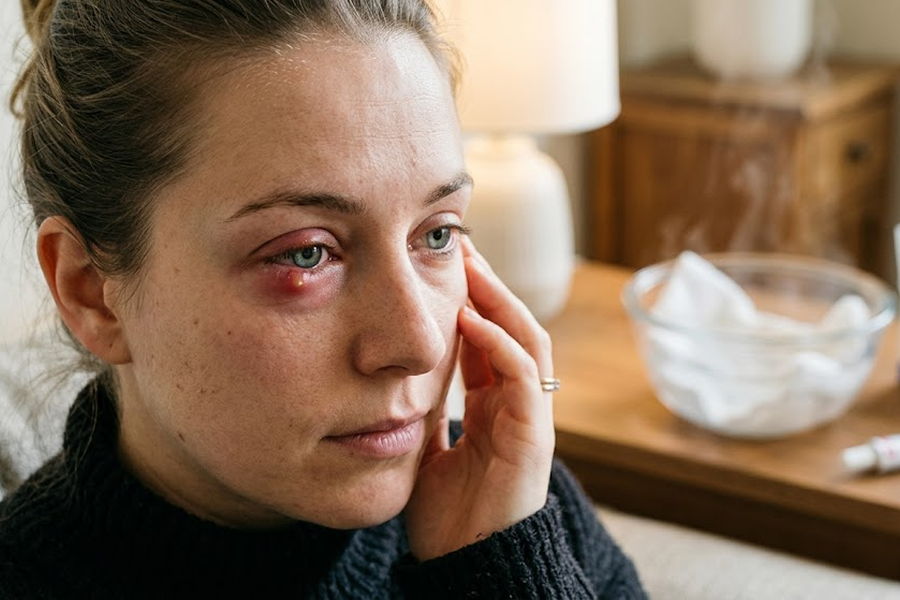
This condition, commonly known as a stye, actually results from the inflammation of the oil glands (meibomian glands) located in our eyelids, which maintain the eye's moisture balance.
What Causes Styes?
The biggest culprit behind stye formation is bacteria called staphylococcus. When these bacteria infiltrate and block one of the oil glands in the eyelid, an infection begins. Unconsciously touching the eyes with dirty hands throughout the day facilitates the transfer of bacteria to this area.
In addition, other common factors that facilitate stye formation include:
- Sleeping without removing makeup,
- Neglecting hygiene rules when inserting and removing contact lenses,
- Using expired or shared eye makeup products,
- Having blepharitis, a condition that causes chronic oiliness and flaking at the base of the eyelashes.
What Are the Types of Styes?
Styes are divided into two types based on the area where they appear:
1. External Stye
This is the most common type. It starts at the base of an eyelash or in an oil gland immediately next to it. When viewed from the outside, it resembles a pimple.
2. Internal Stye
It occurs in the deeper oil glands on the inside of the eyelid. It may not be immediately noticeable from the outside, but as it grows, it can be much more painful than an external stye because it puts pressure on the eyeball.
What Are the Symptoms of a Stye?
The first and clearest sign of a stye is sudden redness and swelling on the eyelid. As the infection progresses, a white or yellow pus-filled spot, similar to a pimple head, appears in the center of the swelling.
Other commonly observed stye symptoms include:
- Significant pain and tenderness in the eyelid
- A stinging and burning sensation, as if there's a foreign object in the eye
- Watery eyes (tearing) and sensitivity to light
- Feeling of heaviness or pressure in the eye
- Crusting and flaking at the base of the eyelashes
- Yellowish discharge in some cases
How is a Stye in the Eye Diagnosed?
When you consult an ophthalmologist with a stye complaint, the diagnosis is made quite quickly. Your doctor will examine your eye in detail with a special device called a biomicroscope. During this examination, blockages in the oil gland ducts, as well as the degree of hardness and sensitivity in the area, are easily detected.
How is a Stye Treated?
The first step in stye treatment is to ensure eyelid hygiene and soften the blockage. One of the most effective home remedies is applying a warm compress. A clean, warm cloth or cotton pad should be held on the eyelid for 5-10 minutes several times a day. This warmth helps to relax the blocked oil ducts, allowing trapped inflammation to drain naturally.
Afterwards, a non-irritating baby shampoo can be lathered and gently massaged into the base of the eyelashes, then rinsed with warm water.
Important Note: If the infection does not subside on its own, your ophthalmologist will prescribe antibiotic eye drops or ointments to eliminate the bacteria. During treatment, it is recommended to avoid wearing makeup and contact lenses, as these can delay healing.
How Does a Stye Go Away? Tips to Speed Up the Healing Process
- Don't Touch Your Eye: Never try to squeeze or pop a stye like a pimple. This can cause the infection to spread across the entire eyelid.
- Continue Warm Applications: Regular warm compresses throughout the day will help keep the glands open and speed up healing.
- Prioritize Hygiene: Wash your hands frequently. Opt for disposable paper towels instead of cloth towels.
- Rest Your Lenses: Return to wearing your glasses until the discomfort completely subsides, and replace your makeup products.
Doctors in our unit
Easily find the doctor who best suits your needs, take a healthy step with expert support.





FAQS
We have put together frequently asked questions so that we can help you better. You can easily find the information you are looking for below
Do you still have something on your mind?
We're here! You can contact us to help you as soon as possible.