

What Is Varicocele?
Varicocele is a condition of dilation (varicosity) of the vessels that feed and surround the testicles in men. It is considered one of the most frequent and important causes of male infertility.


Publication Date:
13/4/2026 1:49 PM
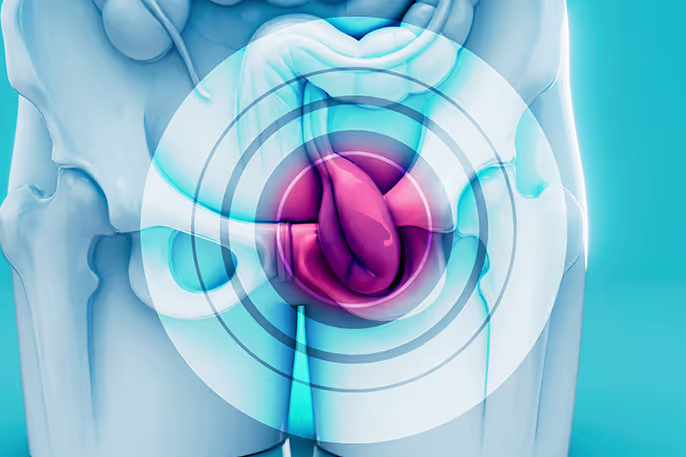
What Is Varicocele?
- In the scrotum (testicular bag), the testes, which nourish pampiniform plexus to the expansion of the vessels called varicocele is called.
- This vasodilation usually occurs more often on the left side, but sometimes it can also be bilateral.
The Effect of Varicocele on Male Reproductive Health
Varicocele can have a negative effect on sperm production and quality. The main reasons for this are:
- Increased testicular temperature: Dilated vessels disrupt the normal heat regime of the testicles, spermatogenesis (sperm production) is adversely affected.
- Disturbance of blood flow: Vascular dilation can prevent adequate oxygen and nutrients from reaching the testicular tissue.
- Oxidative stress: Increased free radicals can lead to sperm DNA damage.
Conclusion: Decrease in sperm count, decrease in motility and deterioration in morphology can be seen. Therefore, varicocele is one of the most common causes of male infertility.
Symptoms of varicocele
- Usually pain or discomfort (especially when standing for a long time)
- Scrotum visible or palpable vasodilation
- In the testicles volume loss or shrinkage (atrophy)
- Sometimes does not give symptomsis only found by chance during infertility research
Classification of varicocele
- Subclinic: It is detected not manually or visibly, but only by doppler ultrasound.
- Clinic: It can be noticed by hand or by eye; it is usually referred to with a complaint of infertility.
Varicocele is a condition that negatively affects sperm production by dilating the vessels around the testicle and is one of the most important causes of male infertility.
With early diagnosis and appropriate treatment, sperm quality can be improved by improving fertility.
What is Microscopic Varicoselectomy?
Microscopic varicocelectomyleading to infertility in men varicocele Applied in the treatment of is the gold standard surgical method.This method involves the removal of dilated vessels around the testicle (varicocele) Connecting one by one under the microscope It is based on the principle.
- Varicocele is characterized by vasodilation of the vessels around the testicle and negatively affects the production of sperm.
- Microscopic varicocelectomy, these dilated vessels thin surgical technique and microsurgical microscope using ligation or cutting is the process.
- Objective: Cutting varicose veins, maintaining blood flow to the testicle, thereby providing the optimal environment for sperm production.
How To Do It?
- Usually general or spinal anesthesia It is applied under it.
- A small incision is made from the groin area.
- Surgical microscope Under it, the testicular vessels are separated one by one.
- Dilated veins are connected or cut, arteries and lymph vessels are preserved.
- Transaction 1 hour lasts, and most patients are discharged the same dayor the next day.
Advantages
- Highest success rate: The number and quality of sperm can increase markedly after surgery.
- Low risk of complications: The risk of hydrocele (fluid buildup) and testicular atrophy is minimal.
- Lymph vessels are protected: The accumulation of fluid in the scrotum is prevented.
- Arteries are protected: Testicular nutrition is not disturbed.
- Short recovery time: Patients can usually return to everyday life within a few days.
Who is it suitable for?
- Infertile men with clinical or subclinical varicocele detected
- Patients with deterioration in sperm parameters
- Men who experience testicular atrophy or scrotal pain
Microscopic varicocelectomy, varicocele safely treated by microscopic techniqueis a modern surgical method that improves sperm parameters and fertility. The complication rate is low, and the success rate is one of the highest.
Doctors in our unit
Easily find the doctor who best suits your needs, take a healthy step with expert support.


FAQS
We have put together frequently asked questions so that we can help you better. You can easily find the information you are looking for below
Do you still have something on your mind?
We're here! You can contact us to help you as soon as possible.